Built 2018 to 2019 · Status Retired · Stack Laravel 5.6, PHP 7.1, Laravel Spark, MySQL, Blade, AdminLTE, FullCalendar, Stripe
Workshops was a web application for running a college professional development program: the catalogue, the schedule, registrations, waitlists, attendance, and all the email that goes with them. I built it for the Professional Development Academy at the San Mateo County Community College District, where it ran as a beta.
Purpose
Colleges deliver a lot of training that also has to be recorded. Flex day sessions, instructional technology workshops, and mandatory HR training all need a completion record afterwards, for accreditation, for department grants, and for faculty flex credit. The people with that problem were the staff who ran those programs. They needed one system that took sign-ups, stopped sessions from overbooking, reminded people to turn up, and produced the report at the end.
What it did
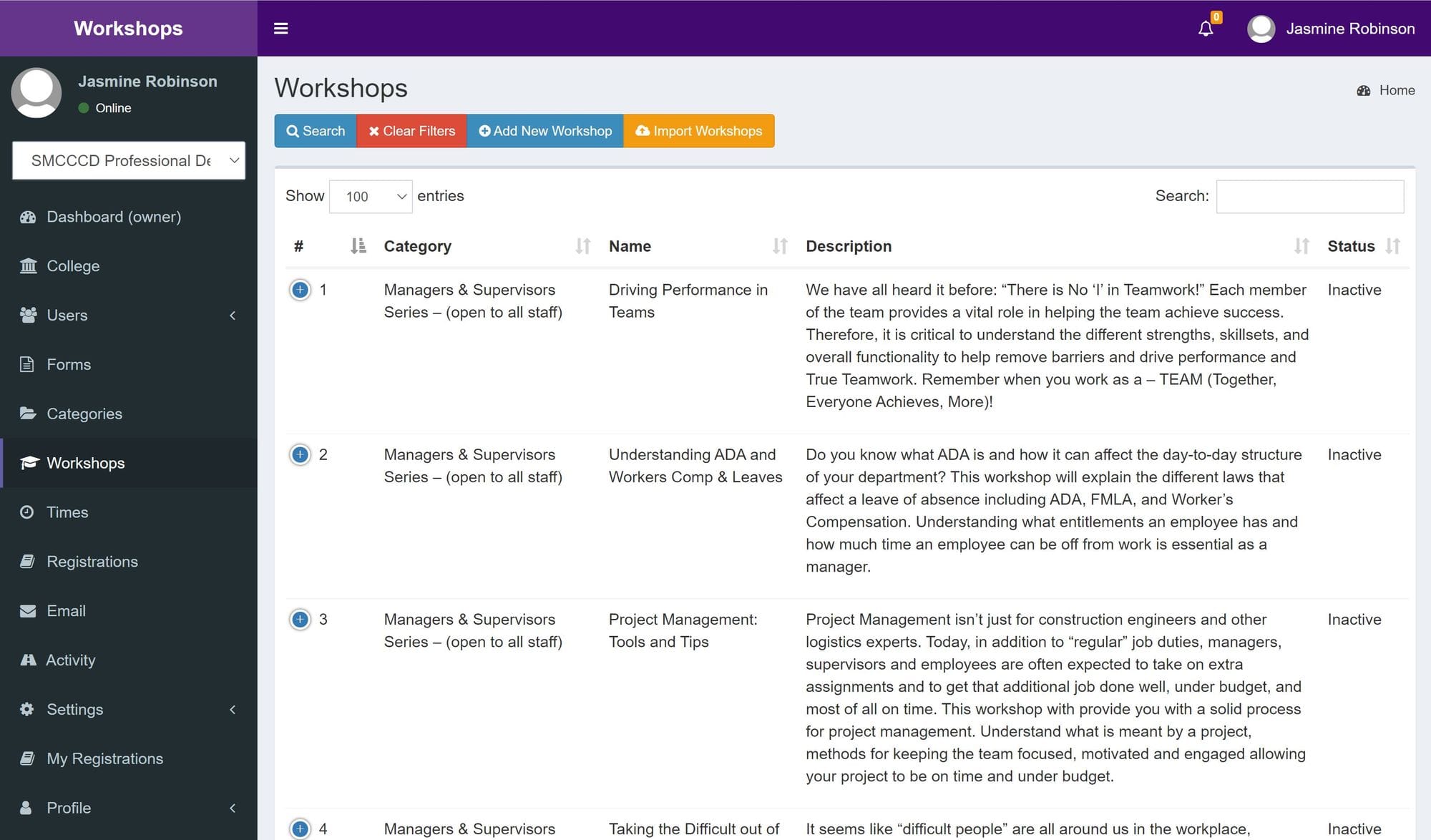
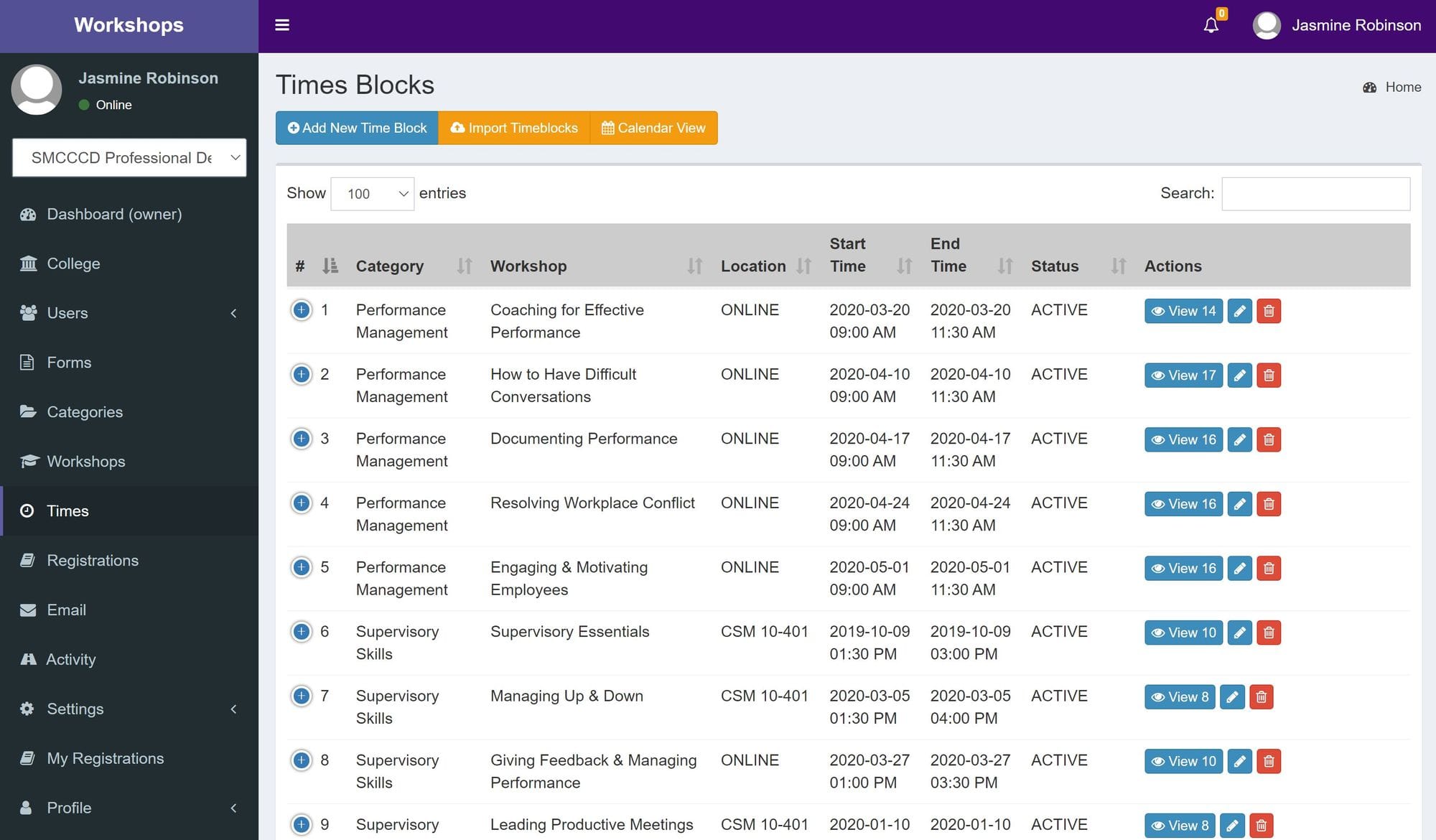
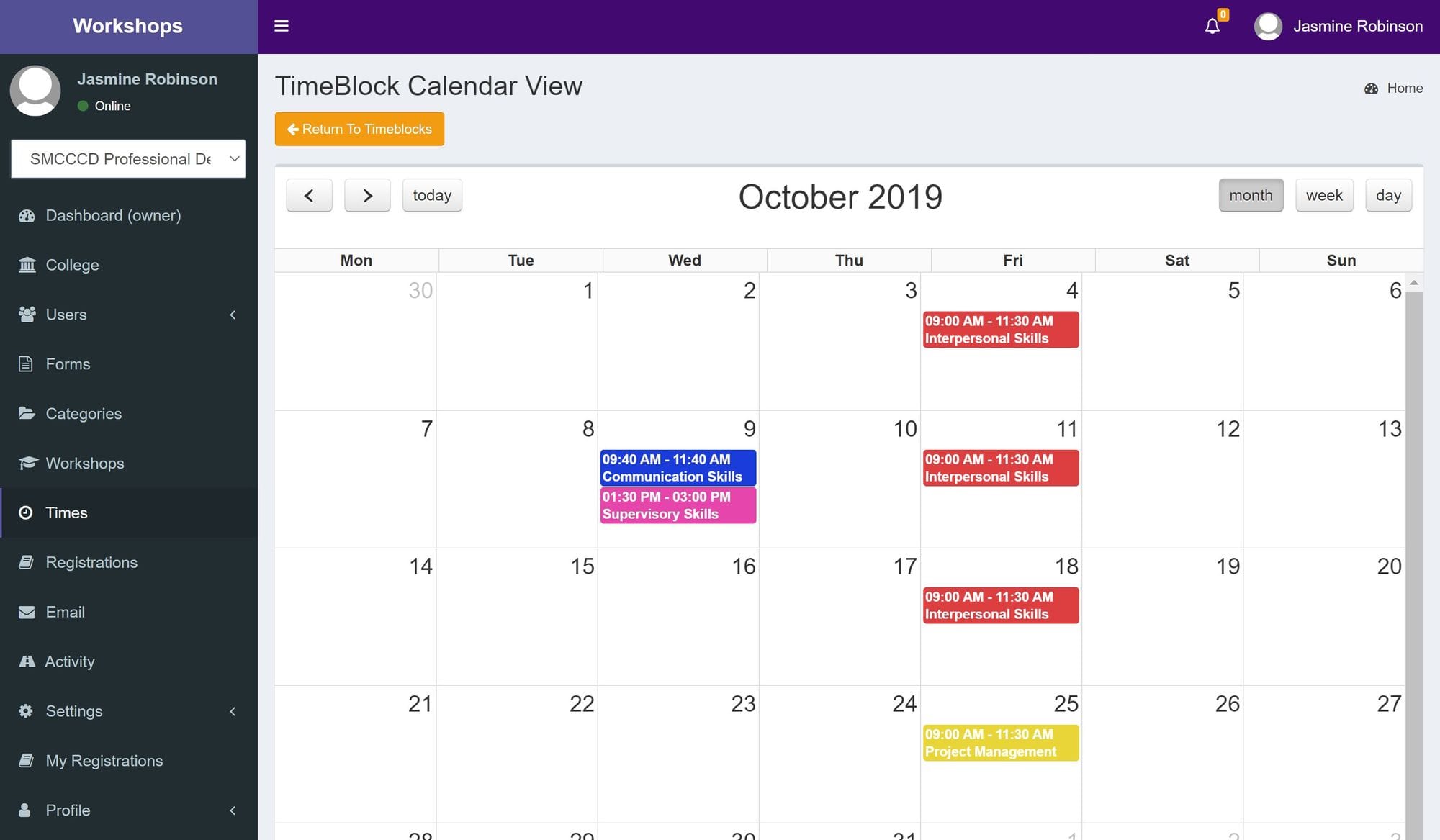
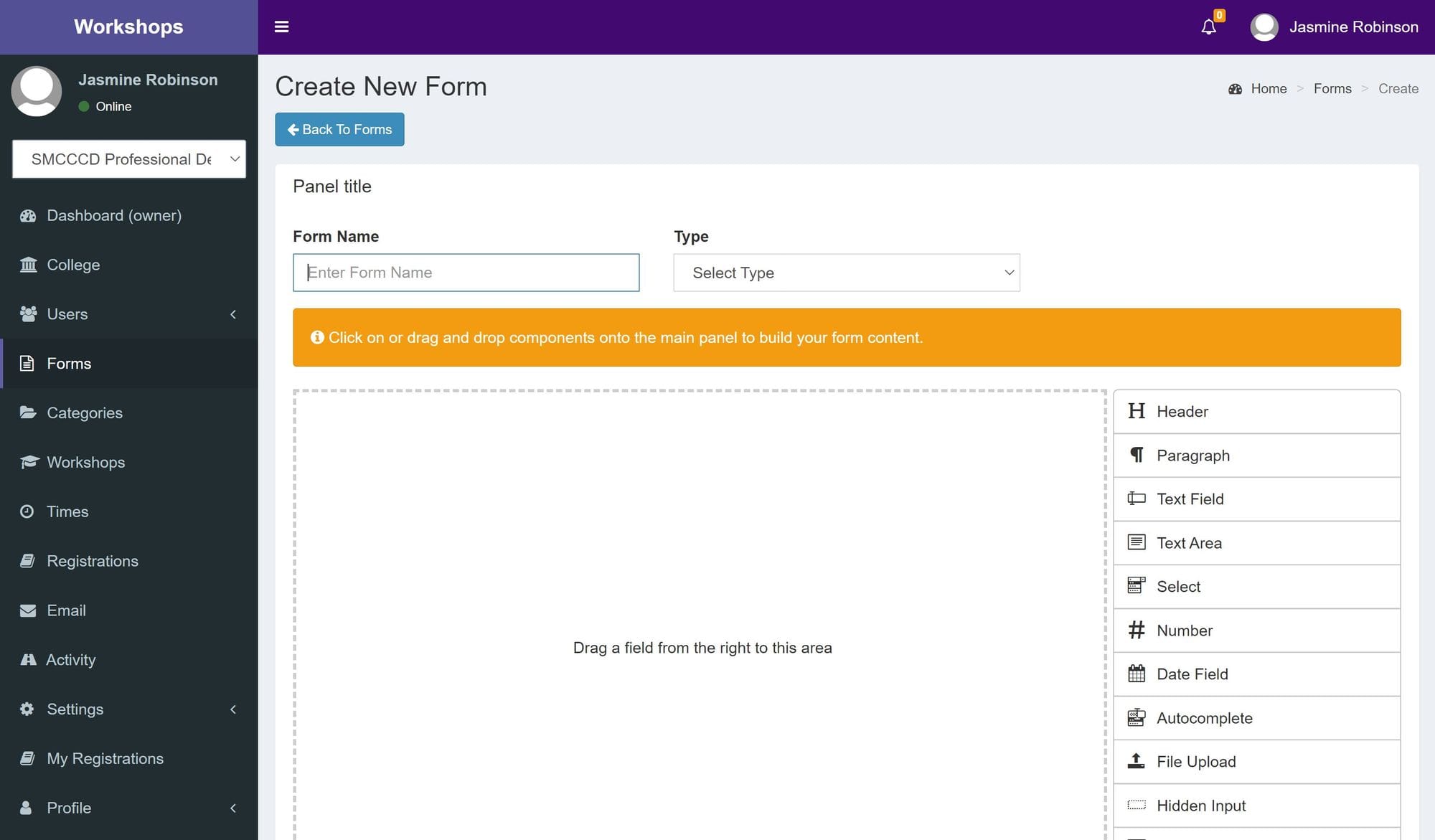
Each workshop record drove the public side of the site automatically. The course listing and the calendar were generated from the schedule, so nobody maintained a separate page of what was on offer. Registration could be restricted to addresses on the college domain, and any workshop could add custom text fields to its form when it needed to collect something specific from participants. Sessions carried an attendee cap and an optional waitlist with its own maximum number of spots, and registrants could update or lock their registration up to a chosen cutoff before the start time: one hour, twelve hours, or one day.
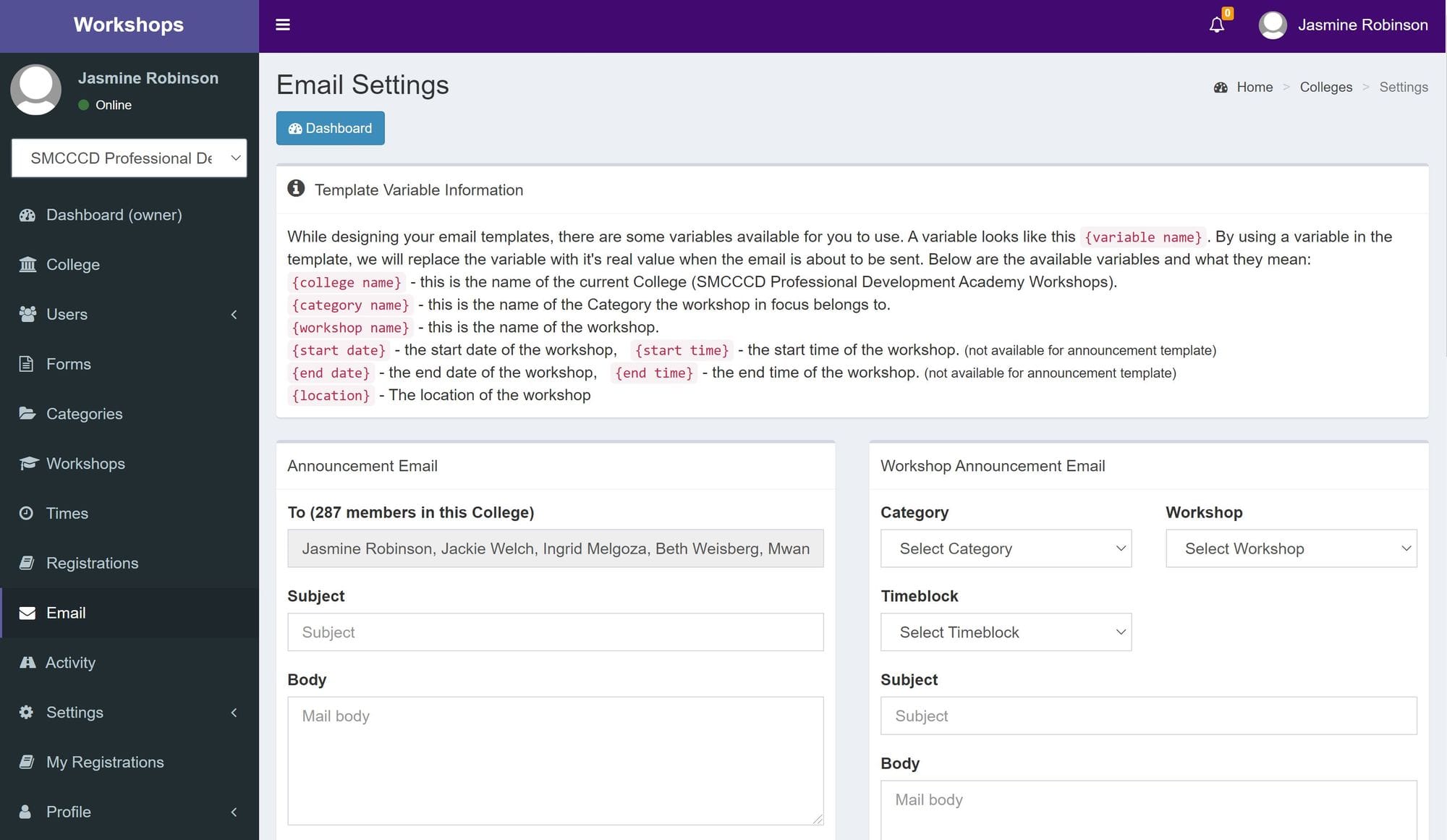
The most interesting piece was attendance. The system recorded who actually showed up and who did not, then used a registrant's own history to generate a likelihood-to-attend score. An organizer looking at a full roster could see how full the room was really going to be, which is a different question from how many people had signed up. Instructors had their own logins showing their schedule and a real-time attendee list. On the outbound side there were reminder emails sent automatically 24 hours before a session, editable templates for pending and approved registrations, ad hoc announcements composed in an online form, and custom surveys for participant feedback afterwards. Reporting covered course completions and the training records that accreditation, department grants, faculty flex credit, and mandatory HR training all depend on. Public pages took the college logo and were themed with CSS, and the interface was built to work on a phone.
Features
- Attendance tracking recorded attendance and no-shows, and scored each registrant's likelihood to attend from their own history.
- Public calendar and course listing were generated from the workshop records, so the public site never had to be updated by hand.
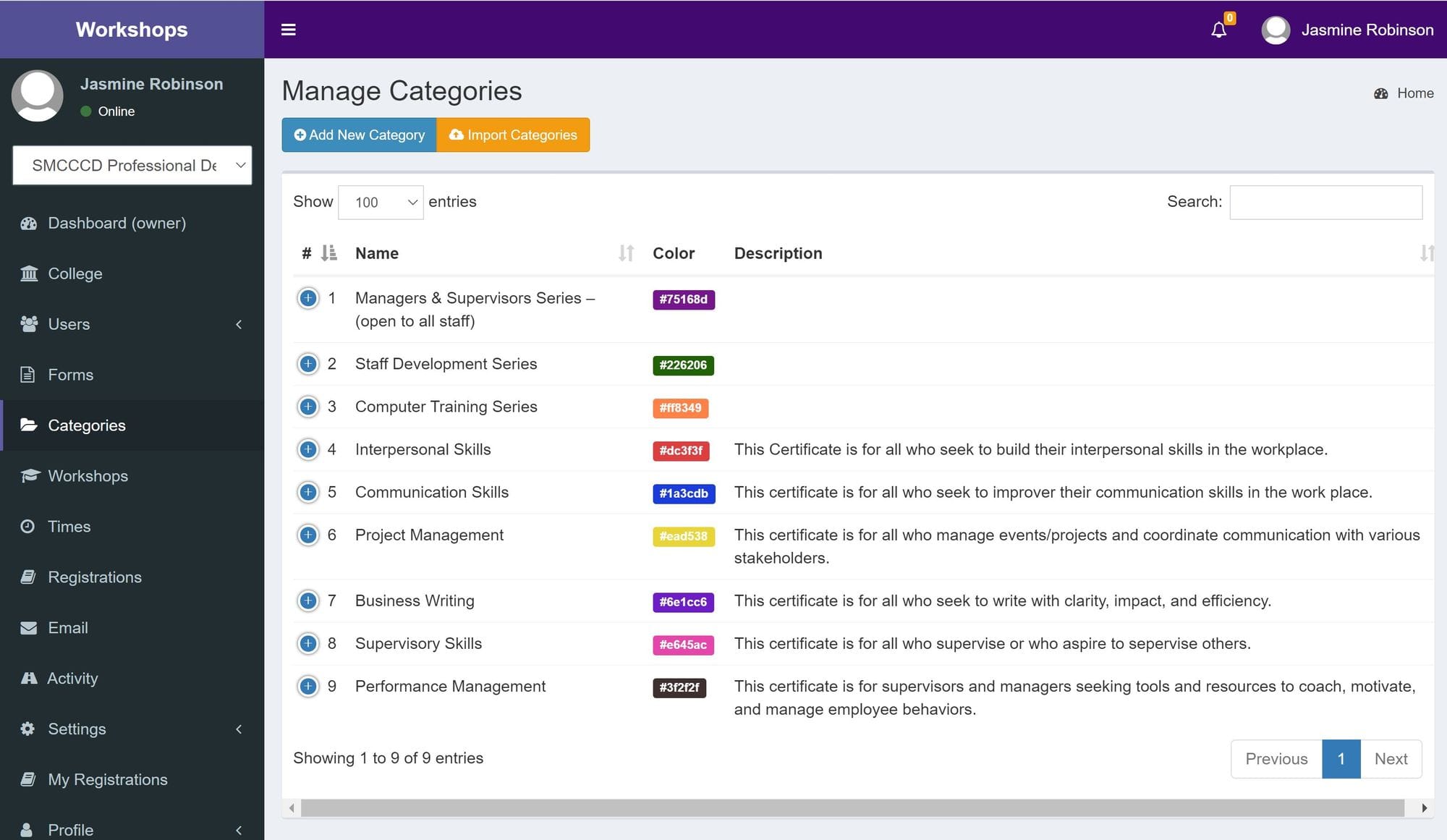
- Categories grouped workshops by subject or by department.
- Attendee limits and waitlists capped each session and held the overflow, with a maximum number of waitlist spots.
- Registration locking let members update or lock their registration until a cutoff of one hour, twelve hours, or one day before the start.
- Custom fields added extra text inputs to a registration form for workshop-specific information.
- Email notifications covered automatic 24 hour reminders, promotion of new workshops, and editable templates for pending and approved registrations.
- Instructor access gave instructors their schedule and a real-time attendee list.
- Surveys were built from custom questions and collected participant feedback after a session.
- Reporting covered course completions, and the training records needed for accreditation, department grants, faculty flex credit, and mandatory HR training.
- College branding applied the institution's logo to the public pages, put the colors under CSS control, and limited registration to its email domain.
- Mobile support meant the whole thing worked on a phone, not just in a desktop browser.
Impact
It was built for one district and used there. The Professional Development Academy ran a real catalogue on it, with sessions scheduled through 2019 and into 2020, and it was live with them in beta in November 2019. The landing page invited other colleges to get in touch about piloting it, but San Mateo is the only deployment I can account for. The application is retired and none of it is still running.
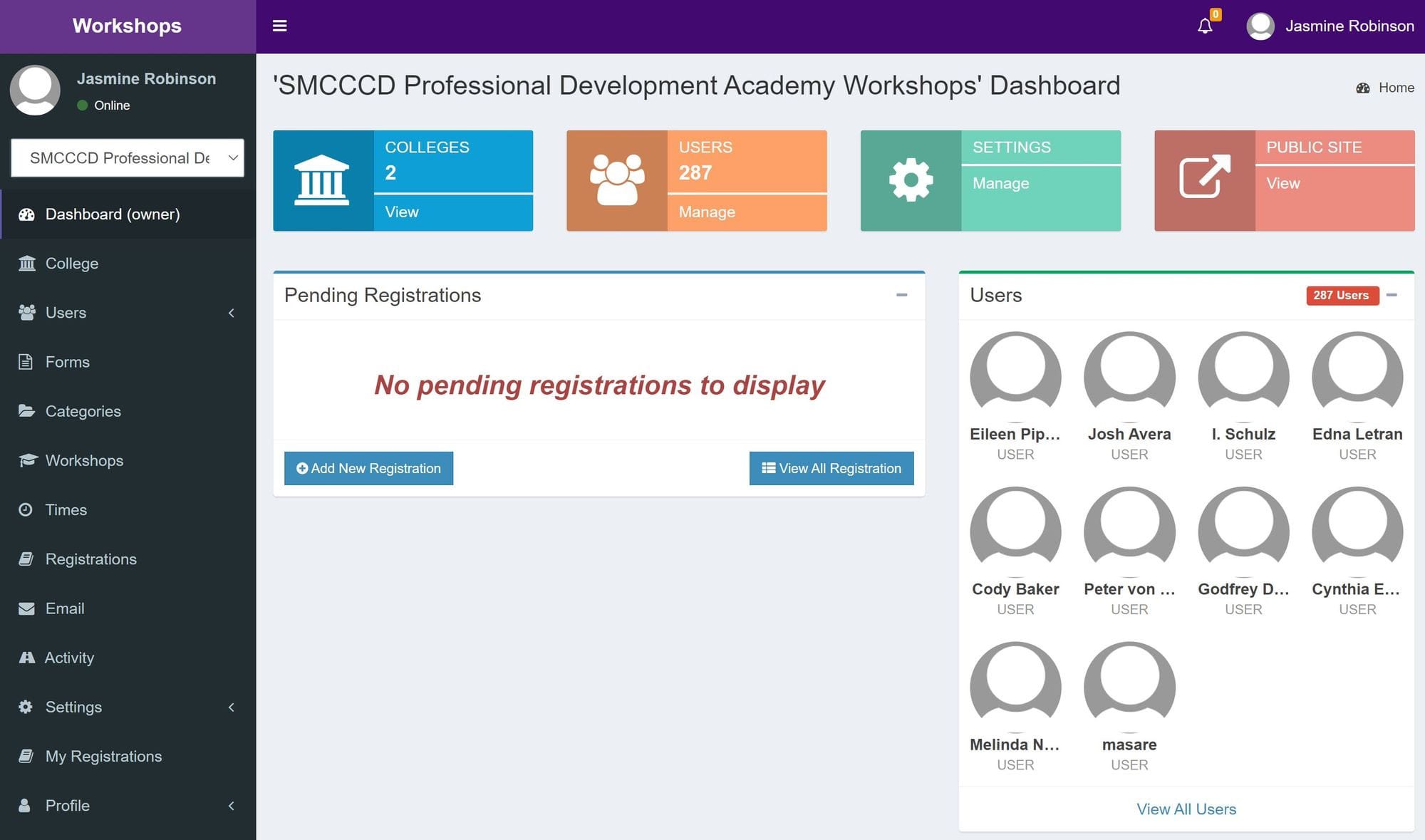
Screens
Links
The original post linked the source at github.com/jazmy/laravel-workshop. That repository is no longer public, so there is nothing live to link to.